
Every scientific paper needs a statement of the problem. Too often, however, papers concerning tobacco, vaping, or nicotine begin with a formulation that is not merely imprecise but misleading.
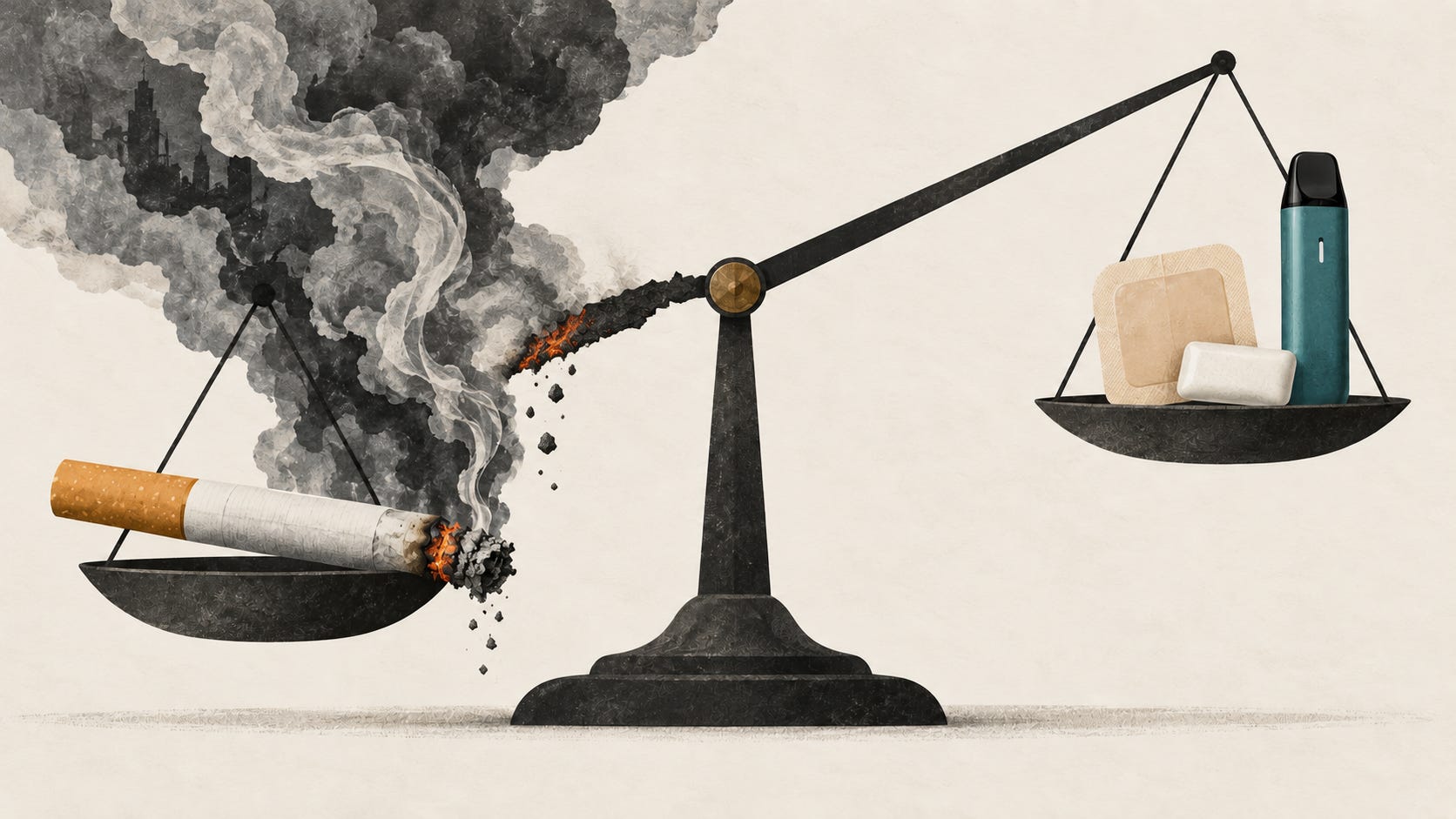
Consider four typical examples published recently:
· A paper in Toxicological Sciences opens: “Tobacco and nicotine use remain leading preventable drivers of cancer risk.”
· A review on treating adolescent nicotine-use disorders states: “Chronic nicotine use remains the leading cause of preventable disease and death in the United States.”
· A mouse-model study begins its abstract: “Nicotine use disorder and electronic cigarette use remain major public health concerns.”
· A call for a global ban on e-cigarette sales says that e-cigarettes expose users to carcinogens and, “increasingly, synthetic nicotine compounds and other psychoactive agents”—grouping nicotine itself with toxic emissions and apparently with products adulterated by other drugs.
These statements differ in degree. Some are simply broad and lack context. Others are factually wrong. Together, however, they illustrate a persistent problem in academic and public health communication: the use of “nicotine,” “tobacco,” “e-cigarettes,” and “smoking” as though they were interchangeable descriptions of essentially the same hazard.
Clearly, they aren’t.
The leading cause of illness and premature death is smoking—not nicotine
The established—and correct—formulation is that cigarette smoking is the leading preventable cause of disease and death in the United States. The distinction is not semantic.
Cigarettes produce smoke through combustion. That smoke contains thousands of chemicals, including scores of carcinogens, carbon monoxide, oxidizing chemicals, fine particles, and other toxicants. These exposures cause the cancers, cardiovascular disease, chronic obstructive pulmonary disease (COPD), and other illnesses responsible for the overwhelming toll attributed to tobacco.
True, nicotine plays a central role because it sustains cigarette use. It causes dependence, is not benign—it has some cardiovascular effects—and should not be used during pregnancy (unless it provides a needed substitute for smoking). But none of that makes nicotine the cause of the overwhelming burden of preventable disease and death attributed to smoking, an established cause of cancer, or—especially for people who would otherwise continue to smoke—a reason not to use alternative, noncombustible products. To suggest otherwise is false and misleading—and violates evidence-based public health practice.
Indeed, the Food and Drug Administration’s own careful, evidence-based description of the tobacco-product risk continuum is clear: combusted products are the most harmful; non-combusted products carry lower health risks; and cigarettes account for the vast majority of tobacco-related disease and death. The agency does not say that all nicotine use is equivalent—or that nicotine itself causes the smoking epidemic’s mortality burden—because neither statement is true.
This is also why nicotine-replacement medications, which contain the same nicotine found in non-medicinal products like e-cigarettes and pouches, have been used safely for decades and are recommended to help people stop smoking. The nicotine delivered by a patch or gum may sustain temporary or even longer-term use and dependence, but it does not expose the user to combustible tobacco smoke.
Treating “chronic nicotine use” as the leading preventable killer would logically implicate nicotine medicines in the very death toll they help reduce.
A continuum of risk is not a declaration of safety
Recognizing differences in risk does not require calling any nicotine product harmless.
For a young person who does not use nicotine, the correct advice is not to start. For an adult who neither smokes nor uses nicotine, the default health guidance is similar. E-cigarette aerosol is not fresh air. Product design, ingredients, dose, patterns of use, and manufacturing standards matter. Long-term risks require—and are receiving—continued study.
But “not risk-free” and “like smoking” are profoundly different propositions.
A useful public health comparison must ask: risk compared with what, for whom, and under what pattern of use? The relevant comparison for a nicotine-naïve adolescent is nonuse. The relevant comparison for an adult who smokes and is otherwise unable or unwilling to quit nicotine is chronic inhalation of over 7,000 chemicals. Failing to state the comparator can turn a scientific observation about hazard into a powerfully misleading message about risk.
The same problem arises when studies identify a biological change after e-cigarette or nicotine exposure and discuss its possible implications without conveying magnitude, clinical significance, or comparison with cigarette smoke. Detecting an effect is not the same as showing that two exposures present comparable risk. A side-by-side experiment does not justify side-by-side rhetoric if the observed effects differ substantially.
The new Toxicological Sciences paper is revealing in this respect. Its abstract reports that cigarette-smoke extract consistently suppressed an inflammatory response, while e-cigarette-vapor extract alone had “minimal effect.” Yet the paper opens by joining “tobacco and nicotine use” as leading drivers of cancer risk. The study’s own results point to differences, while its framing blurs them.
Boilerplate language is not harmless
It may be tempting to view these opening statements as inconsequential background language. We see it all the time, right? But boilerplate repeated across hundreds of papers produces the scientific atmosphere in which clinicians, journalists, policymakers, students, and ultimately the public form their understanding.
This atmosphere has been badly polluted in recent years. Misunderstanding is widespread.
In a national survey of more than 1,000 physicians, 80 percent incorrectly believed nicotine directly causes cancer, while similarly large majorities attributed COPD and heart disease directly to nicotine. Public perceptions of the relative harm of vaping and smoking have also moved further and further away from the evidence in recent years.
Academic language is not the sole cause, of course. Repeated false and exaggerated claims from advocacy organizations, government agencies, politicians and the media fuel the confusion and misunderstanding. But researchers and journals bear a primary responsibility, as their work often underpins the communications of others.
The Lung Health Foundation—a Canadian charity engaged in research, lung-health education, advocacy, and patient support—offers another example. Its Ontario Nicotine Action Table states: “Nicotine use remains one of Ontario’s most significant and preventable drivers of chronic disease.” It then sets separate targets of reducing tobacco use below 5 percent by 2035 and nicotine use below 5 percent by 2045. The quoted sentence does more than express concern about dependence: it attributes the province’s chronic-disease burden to nicotine use broadly, without distinguishing smoking from nicotine-replacement therapy, vaping, or oral nicotine products. That is how a category error in scientific communication migrates into public health strategy and widespread misunderstanding.
The downstream consequences are not only serious—they are deadly. A clinician who believes nicotine causes the major diseases of smoking will be less willing to recommend nicotine-replacement therapy or even discuss the option of switching completely to a lower-risk alternative. A policymaker who has been led to believe that all nicotine products are variations of the same threat may treat the least harmful products as severely as—or more severely than—cigarettes. (We have seen this time and again in federal, state, and local policymaking.) And a person who smokes can easily conclude that there is little benefit in switching if nicotine is said to be the killer.
We are seeing it all around us. Risk misperception can perpetuate the very behavior that causes the most harm.
Precision is not difficult
Researchers do not need to minimize nicotine dependence, youth use, or the potential harms of vaping. They simply need to identify the problem accurately.
Instead of writing:
“Chronic nicotine use remains the leading cause of preventable disease and death in the United States.”
write:
“Cigarette smoking remains the leading cause of preventable disease and death in the United States.”
Instead of:
“Tobacco and nicotine use remain leading preventable drivers of cancer risk.”
write:
“Combustible tobacco use is a leading preventable cause of cancer. Although nicotine causes dependence, smoking-related cancer risk results from the toxic products of combustion, not nicotine.”
And when the subject is vaping, state the evidence objectively and completely:
“E-cigarette use is not risk-free and should be discouraged among young people and people who do not smoke. For adults who smoke, switching from cigarettes to a regulated noncombustible product substantially reduces exposure to harmful toxicants.”
Those formulations do not advocate. They convey accurate health and scientific information.
The ethical obligation is to name the hazard correctly: nicotine and smoke are not synonyms
Public health has spent decades teaching that “tobacco” kills. That shorthand was understandable when the tobacco marketplace was dominated almost entirely by combustible cigarettes. It is no longer adequate in a world that includes e-cigarettes, nicotine pouches, reduced-risk smokeless tobacco, and heated products—all of which have different compositions, delivery systems, and risk profiles … and all of which are far safer than combusted tobacco products.
The central fact remains: inhaling smoke from burning tobacco is extraordinarily dangerous. Nicotine helps keep people inhaling it, but nicotine and smoke are not synonyms. Addiction and lethality are not synonyms. Hazard and risk are not synonyms.
And youth prevention and adult harm reduction—this cannot be repeated too often—are not mutually exclusive goals.
Scientific authors, peer reviewers, and journal editors should stop using and giving a pass to language that collapses these distinctions. That does not mean that every paper needs to offer a treatise on the continuum of risk. Often one accurate sentence would be enough.
When the subject is the largest preventable cause of death in the world, precise language is not a nicety. It is our ethical responsibility.
Examples Cited
1. Sullivan JYC et al. “Cigarette Smoke and E-Cigarette Aerosol Extracts Induce Myelopoiesis and Suppress Inflammatory Cytokine Production.” Toxicological Sciences. Published online September 4, 2026. doi:10.1093/toxsci/kfag096.
2. Davis J, Vaezazizi LM, Farahmand P. “Updated Review for the Treatment of Adolescent Nicotine Use Disorders.” Child and Adolescent Psychiatric Clinics of North America. Published online June 29, 2026; print issue October 2026. doi:10.1016/j.chc.2026.05.006.
3. Zahedi S et al. “Passive Nicotine Vapor Exposure Model in Mice Reveals Translationally Relevant Dose-Dependent Cotinine Levels and Withdrawal Behaviors.” Journal of Neuroscience Methods. Published online August 24, 2026. doi:10.1016/j.jneumeth.2026.110884.
4. Soto-Martínez ME et al. “International Society of Pediatric Respiratory Diseases-Inspired Call to Action: A Global Ban on Electronic Cigarette Sales to Protect Our Children’s Future.” Paediatric Respiratory Reviews. 2026.
5. Lung Health Foundation. “Ontario Nicotine Action Table.” Originally published March 30, 2026; updated September 1, 2026.
I have to agree with you that nicotine does not cause cancer. Nicotine causes addiction. A nicotine addiction can be difficult to recover from. So, when you smoke you can be an addict with cancer! I am not trying to split hairs, be funny, or a wiseass But , someone who smokes can simultaneously go through both treatments Addiction and cancer. Both can be extremely difficult. So, for many people who believe in prevention; don’t smoke, do not vape, do not use chewing tobacco and etc. Unfortunately, advertisers know how to sell their products well and to whom.